

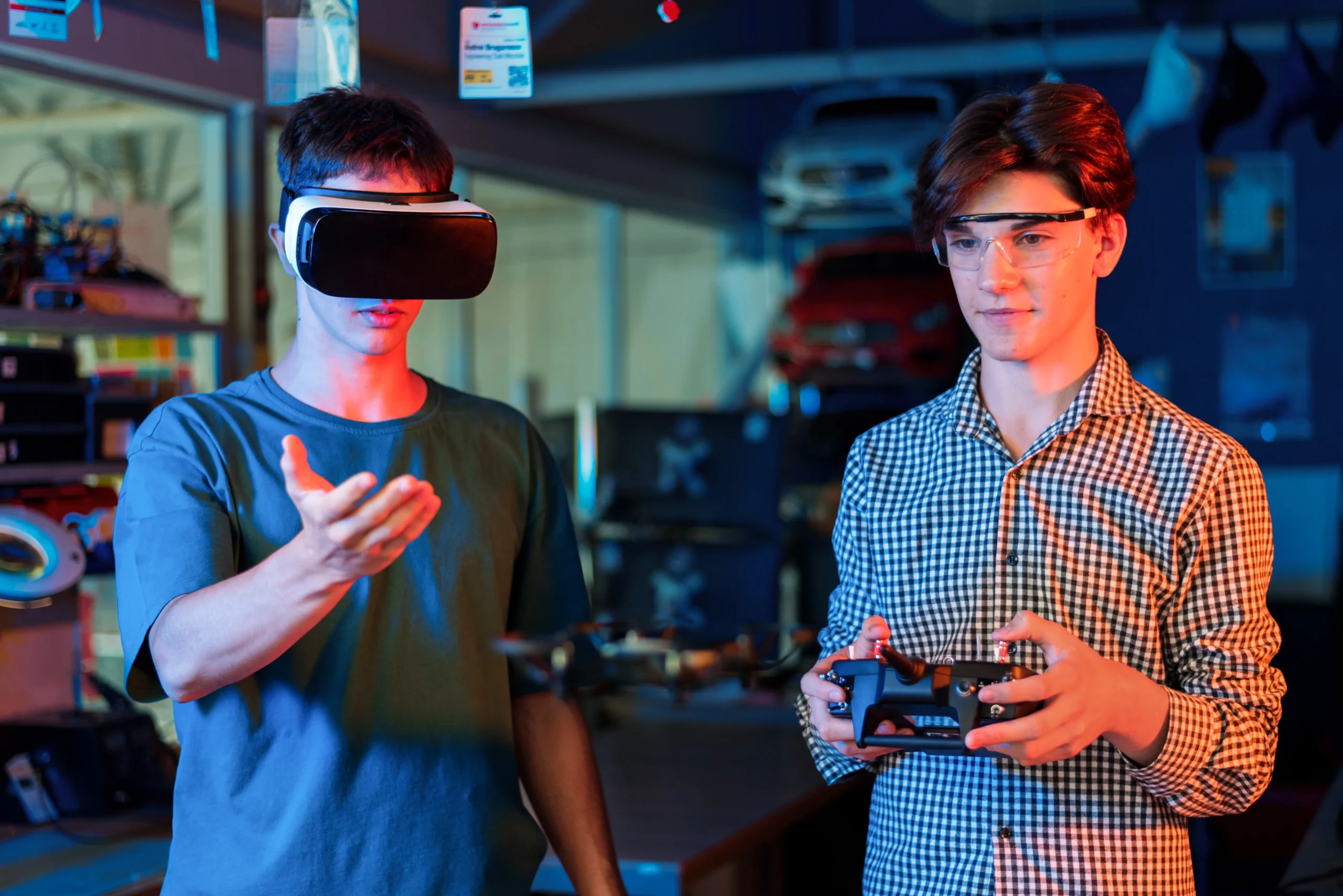
To start the Virtual Reality, one has to have the appropriate equipment to make it a smooth and engaging experience. Although VR technology can be perceived as complicated, the knowledge of the key elements can make the process of setting up the equipment less complicated and accessible to newcomers.
The VR headset is the most significant equipment. This is a device that is put on top of the eyes and the virtual world is seen. It has in-built screens and lenses which form three dimensional effects. There are various headsets depending on the VR systems on use which include PC, console or standalone.
Another important element is the motion controllers. These portable equipments enable their users to communicate with the virtual world. They follow the hand gestures and allow the user to be able to pick things, use the menu and to do missions in the virtual world. There are also some advanced systems, which have hand tracking and no controllers.
The movement and the location of the user are recorded by the use of sensors or tracking systems. External sensors can be installed in the room to monitor motion in the PC-based setups. Individual systems tend to have embedded sensors because they are more convenient and portable.
Certain VR systems require a strong computer or other compatible consoles. VR PC has to be run on a high performance computer with good graphics capabilities to execute the complex applications. The Console VR is compatible with particular gaming consoles in order to support the VR experiences.
Accessories can also be used to enhance the experience. Other things like adjustable straps, face pads, and headphones are good to make the use comfortable when used a lot. Fit and comfort must be taken care of to avoid fatigue or discomfort.
Also, it is necessary to have the physical space. VRs may involve motion and hence a safe and open space can be used to avoid accidents, and enhance experience.